
Spider Mites and Mealybugs: How to Identify and Treat Them
This post may contain affiliate links. If you buy through them, we may earn a commission at no extra cost to you.
The leaves look dusty, but wiping them doesn’t help. Or there’s a puff of white fluff tucked where a leaf meets the stem. In winter, those two clues usually point to spider mites and mealybugs.
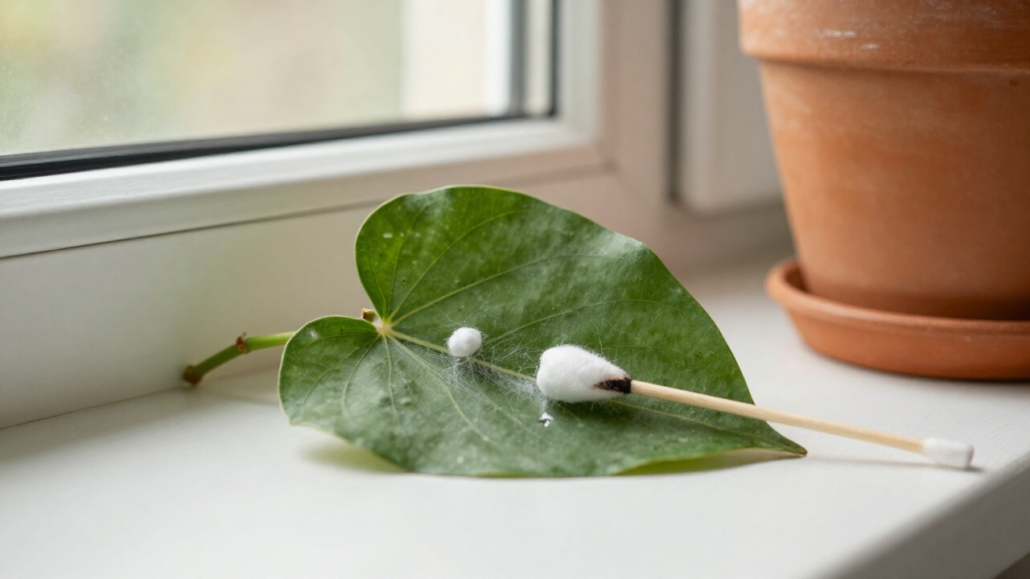
Spider mites are specks about the size of a period that leave fine speckling and webbing on the undersides of leaves. Mealybugs are soft, oval insects covered in white wax. Both can be beaten if you catch them early: move the plant away from the others, rinse it, then repeat a hands-on treatment every few days until it stays clean. That means a forceful water spray for mites, rubbing alcohol on a cotton swab for mealybugs, and insecticidal soap for either one.
Why these two show up in winter
University of Minnesota Extension calls spider mites the number one houseplant pest, since warm, dry indoor air suits them, and ranks mealybugs second. University of Wisconsin Extension adds that mites often become a problem on houseplants in November, when the furnace starts running and the air dries out. If your home runs very dry, our post on whether your houseplants need a humidifier in winter is a good next read.
Both pests usually arrive on a new plant or on one that spent the summer outdoors, according to Clemson’s extension service. That makes a close look at any newcomer worth the two minutes.
How to tell spider mites from mealybugs
University of Maryland Extension describes spider mites as about the size of a period on a page, so you will usually see the damage first. Look for fine white speckles on the leaves, then thin webbing under the leaves and between leaves and stems. Heavy infestations can cause yellowing, wilting and leaf drop. To confirm, hold a sheet of white paper under a leaf and tap it. Wisconsin Extension suggests this, and tiny specks that move across the paper are mites.
Mealybugs are easier to spot. Wisconsin Extension describes them as soft-bodied and covered in cottony white wax, gathering at stem tips, new growth and the joints where leaves meet stems. White cotton-like masses around the drainage holes are another sign. Iowa State Extension points to sticky honeydew on the leaves as a clue too, and says a single female can lay 300 or more eggs in a waxy sac. That is how a few white spots turn into a colony so fast. You can read more in its mealybug guide.
Step one: isolate the plant
Move the plant away from your others before you do anything else. Washington State University Extension says spider mites spread mostly by leaf contact, by walking and by drifting on strands of webbing, so even a little distance helps. Mealybugs also crawl between plants when leaves touch. WSU recommends keeping the plant apart until it has been clean for at least a full month.
How to treat spider mites
Start with water. Take a sturdy plant to the tub, shower or sink and spray it forcefully, getting under the leaves. Clemson’s extension service says this dislodges mites and breaks up their webs, and that repeating it helps. Do it every few days.
If water alone isn’t enough, move to insecticidal soap or a horticultural oil. Colorado State Extension says soaps and oils are the main effective choices for mites on houseplants, and it suggests treating all susceptible houseplants at the same time. Soap works only while it is wet and touching the mite, so coat the undersides of the leaves. Nebraska Extension suggests at least two or three applications, four to seven days apart, and warns that homemade soap sprays can burn leaves. A ready-made product used by its label is the safer route.
Neem oil products work in much the same way. The University of Florida’s IFAS Extension says they need direct contact and thorough coverage, and work best on soft-bodied pests such as spider mites and young mealybugs. Whatever you buy, check that the label lists mites and houseplants. Wisconsin Extension warns that most general insecticides no longer work on spider mites because of resistance. WSU suggests spraying in a shaded spot outdoors when that’s practical and letting the plant dry fully before it comes back in. In late November, a bathtub or utility sink works instead.
How to treat mealybugs
For a light infestation, dip a cotton swab in rubbing alcohol and touch each mealybug. University of Maryland Extension says treated insects turn light brown, so you can see what you’ve already hit. WSU Extension advises testing the alcohol on one leaf first and waiting a few days, because too much can harm some plants.
For wider infestations, Wisconsin Extension says insecticidal soap or horticultural oil can work, but the spray has to reach the tight spots where the insects hide, and it may take several applications. UMass Extension notes that the waxy coating makes mealybugs hard to kill with pesticides, so catching them while there are only a few matters a great deal.
Check the soil too. Wisconsin Extension says mealybugs can live on roots, and confirming that can mean sliding the plant out of its pot. Root infestations are particularly hard to control. If a plant is heavily infested and easy to replace, Iowa State Extension says it may be best to throw it out before the insects reach your other plants.
How to keep them from coming back
Weekly checks catch most problems early. Clemson’s extension service recommends looking at the undersides of leaves about once a week, and says a 10x magnifying lens makes small pests and their eggs easier to see. A basic hand lens is all you need. Wisconsin Extension also suggests keeping a new plant apart for a week or so and inspecting it closely before it joins the others.
Plant stress matters too, since Wisconsin Extension notes that spider mites favor stressed plants. Our guide to how often to water houseplants in winter covers the watering side. If a plant has yellow leaves but no webbing or fluff, our post on why houseplant leaves turn yellow in winter will help you sort out the cause. Tiny flies around the soil are a different pest, and our guide to getting rid of fungus gnats has the fix.
FAQ
How long does it take to get rid of them?
Plan on weeks, not days. Clemson’s extension service says pests may be hidden or still in the egg stage, so it often takes more than one treatment.
Should I treat plants that look fine?
Check them closely at least. Colorado State Extension suggests treating all susceptible houseplants at the same time, and a weekly look under the leaves will tell you which ones need it.
What about herbs on my windowsill?
WSU Extension does not recommend chemical controls on edible plants grown indoors for cooking. Minnesota Extension lists water sprays and removing mealybugs with tweezers or an alcohol swab as physical options.
If you’d like a quick reference for plant problems like these, you can get our free Houseplant Rescue Cheat Sheet here.
Ginger Durett has more than 10 years of experience as a professional grower, including general growing and medicinal cannabis growing. Blair Sutherland is a co-founder of Happy Healthy Living.

Leave a Reply
Want to join the discussion?Feel free to contribute!